



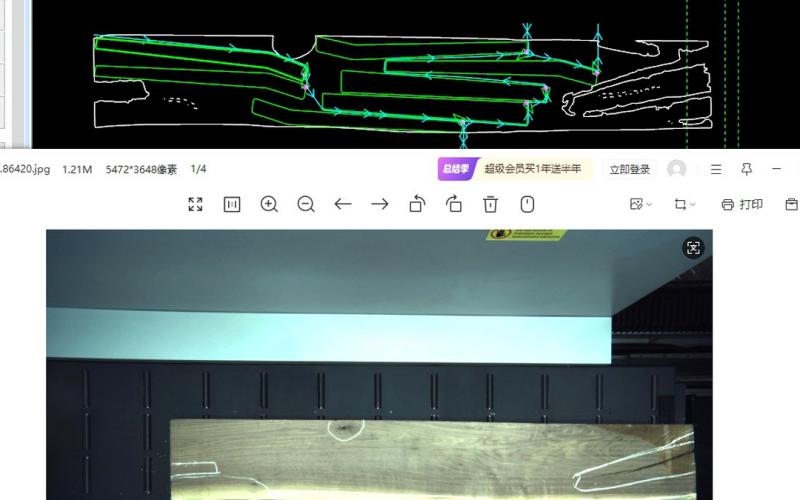
Automatic nesting arranges required parts on a board to improve material use. For solid wood, nesting is more complex than sheet material because each board can have defects, irregular edges, grain direction, and different usable zones.
What information does the system need?
- Board size and shape
- Visible defect areas
- Required part sizes
- Grain or direction requirements
- Cutting constraints and tool path requirements
The typical process
The board is scanned first. Then the system identifies usable and restricted areas. After that, nesting software places parts on the board and generates a layout for cutting or marking. This layout can then be used by a CNC cutting station or a laser marking process.
Why solid wood nesting is different
Solid wood is not a uniform panel. Natural defects and irregular outlines affect how parts should be placed. This is why AI scanning and defect detection are valuable before the nesting step.
JXH machine options
JXH offers AI Cutting Machines for scanning, nesting, and CNC cutting, as well as AI Laser Marking Machines for marking optimized layouts before downstream cutting.
FAQ
Is automatic nesting only for rectangular panels?
No. With proper scanning, nesting can also be applied to irregular solid wood boards.
Can nesting be connected to CNC cutting?
Yes. In an integrated workflow, the nesting result can guide the CNC cutting process directly.