



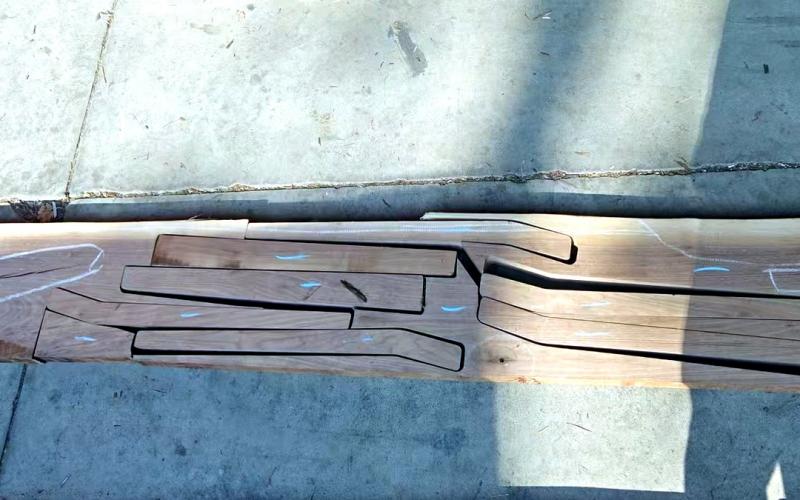
Irregular solid wood boards are difficult to process efficiently. Each board has a different shape, natural edge, knot distribution, crack position, and usable area. Improving yield starts with understanding the board before cutting.
The common problem
Traditional manual cutting often relies on workers to visually mark defects and arrange parts. This can work for small batches, but it becomes inconsistent when board shapes and production orders change frequently.
Key steps to improve yield
- Scan the real board outline before cutting
- Identify visible defects such as knots, cracks, and bark edges
- Match parts to usable areas of the board
- Use nesting software to reduce waste
- Cut according to the generated layout instead of manual guesswork
How JXH approaches the workflow
JXH AI cutting machines are built for solid wood factories that need a practical workflow from board scanning to CNC cutting. The system helps convert irregular board information into a cutting layout that can be used directly in production.
Where this is useful
This approach is useful for furniture parts, wooden kitchenware, solid wood components, and factories that process boards with natural defects or irregular edges.
FAQ
Does nesting replace operator experience?
It does not remove the need for production knowledge, but it reduces repetitive manual layout work and helps make decisions more consistent.
Can this improve daily output?
Yes, especially when scanning, nesting, and cutting are connected in one workflow instead of being handled as separate manual steps.