



The right machine is determined by the board, the part and the required production flow. This guide compares the JXH AI Cutting Machine and JXH AI CNC Router using confirmed production examples rather than general claims.
Quick answer
Choose an AI Cutting Machine when
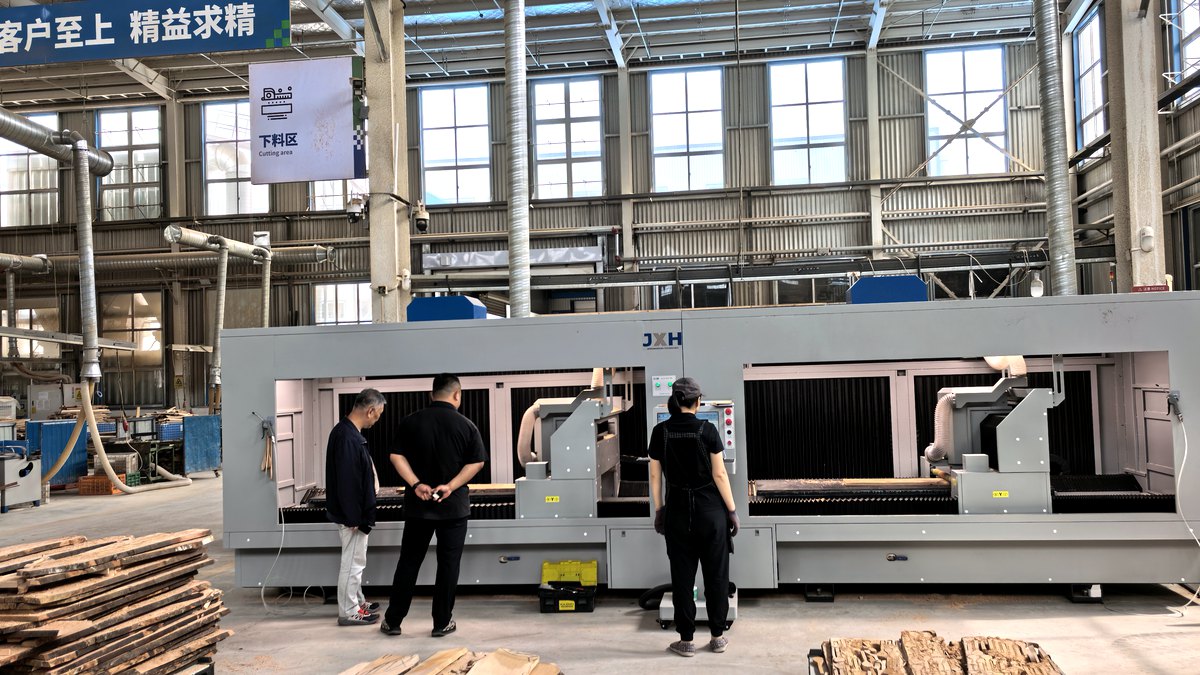
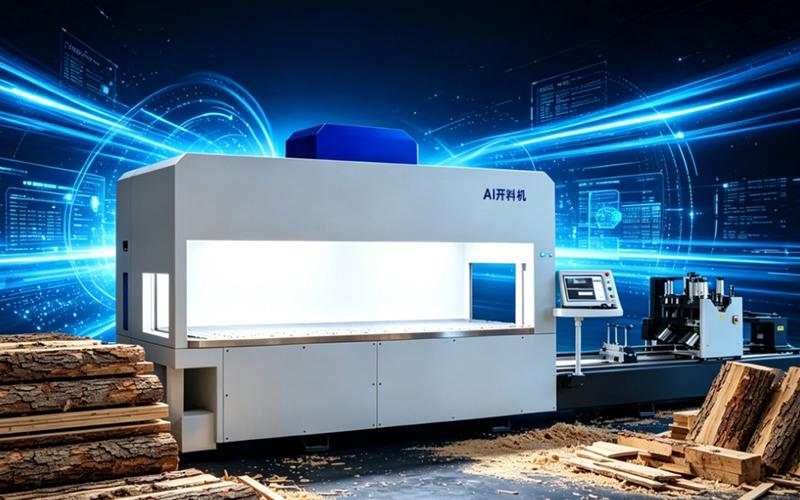
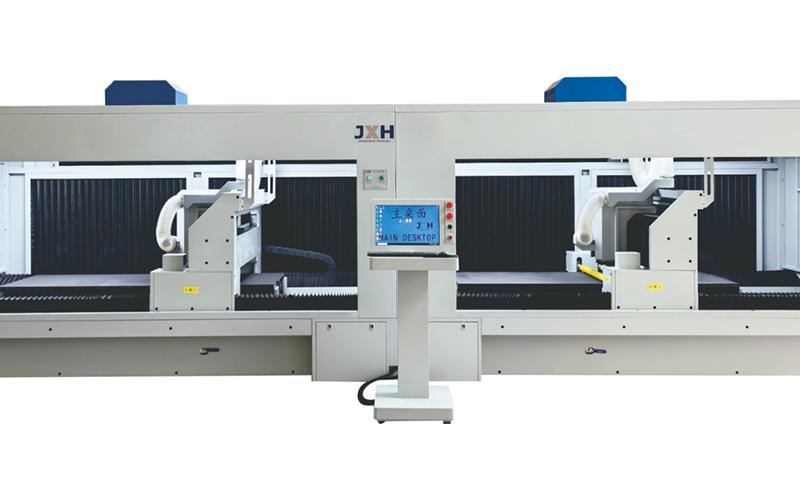
You process thick, rough-edged or naturally shaped solid wood boards and need strong through-cutting. Its high-power upper and lower spindle arrangement is designed for demanding solid wood blank production.
Choose an AI CNC Router when
You mainly process thinner solid wood boards or laminated panels and need a CNC routing workflow for repeated parts. It is well suited to thin-board furniture and kitchenware production.
Machine comparison for solid wood buyers
| Decision factor | JXH AI Cutting Machine | JXH AI CNC Router |
|---|---|---|
| Typical material | Thick natural boards, rough-edged boards and high-density solid wood | Thin solid wood boards, laminated boards and prepared panels |
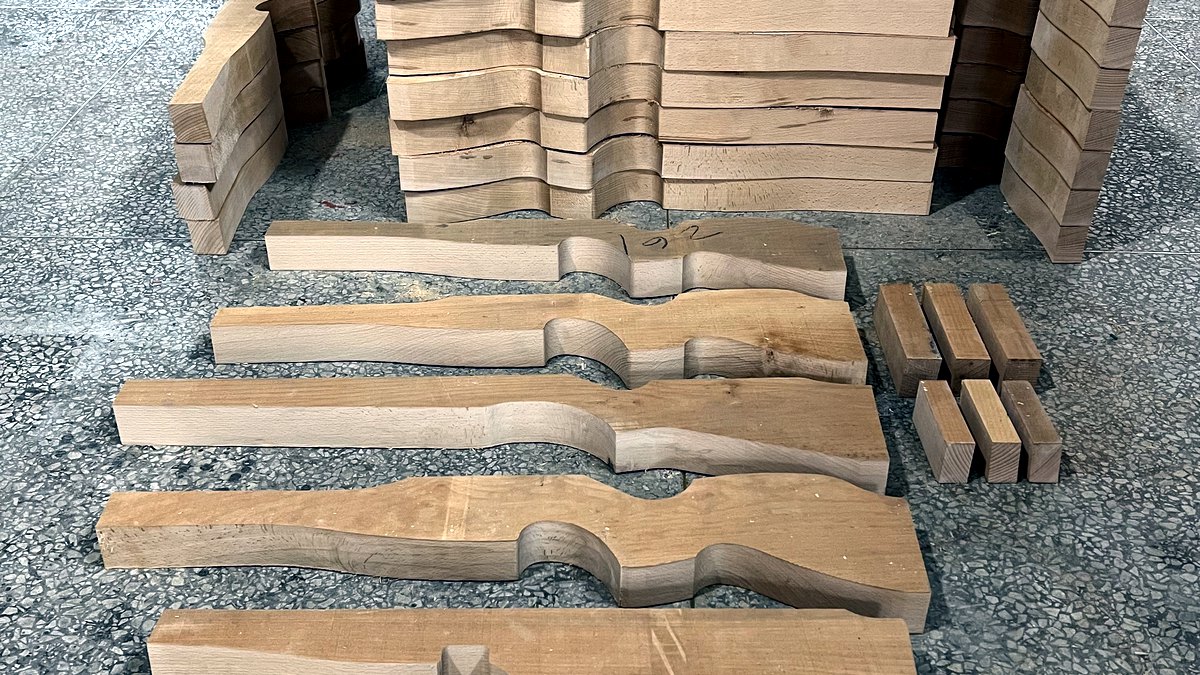
| Typical parts | Gunstock blanks, thick chair parts, brush handles, guitar blanks and heavy kitchenware blanks | Thin furniture components, wooden utensils, boards and repeated routed parts |
| Cutting configuration | Powerful upper and lower spindles with double-ended single-flute cutters | CNC routing configuration selected for board thickness and part geometry |
| Best reason to choose | Robust cutting of thick or irregular natural boards | Efficient routing of thinner boards and panel-type materials |
What the AI workflow does before cutting
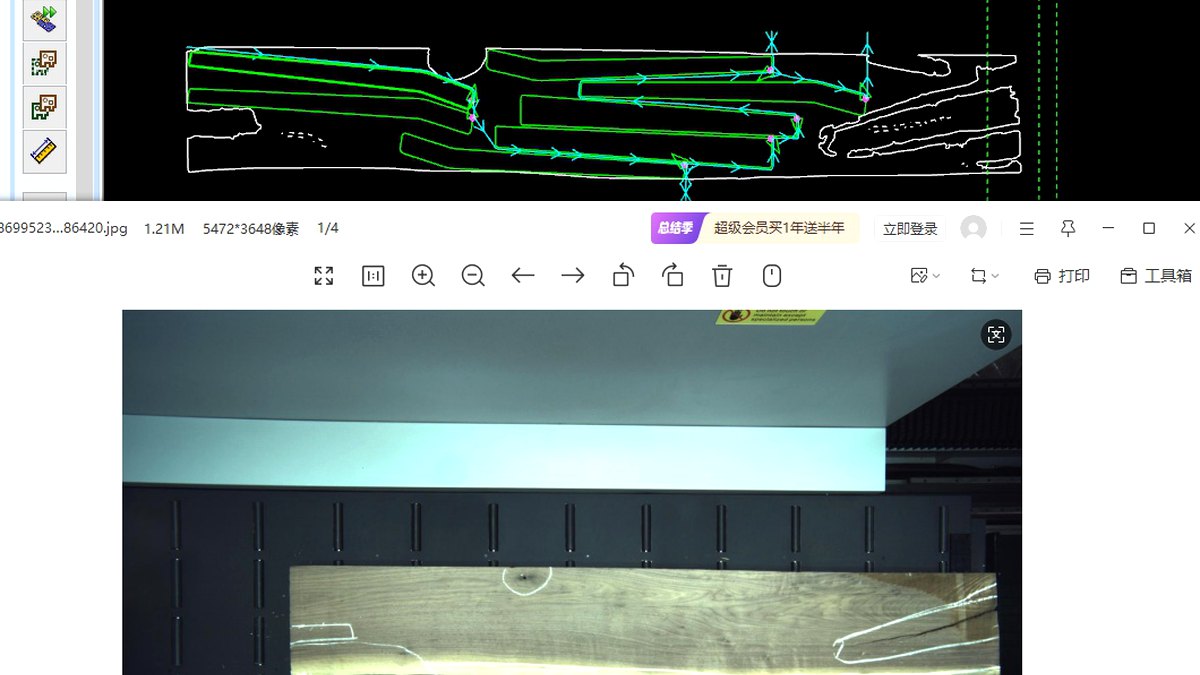
Both product families connect machine vision with JXH nesting software. The workflow identifies the board boundary and visible defects, calculates usable cutting areas, places imported parts around defects and optimizes the tool path. Parts can rotate automatically, and the operator can still add, delete, move or rotate a part before production.
Confirmed production evidence
These figures come from specific JXH projects and reports. Actual results vary with species, thickness, defect level, part mix, tool selection and operator settings.
| Application | Board data | Measured result |
|---|---|---|
| Gunstock blanks, JXH B06-0630 | Production varies by stock size and board quality | 700-800 stocks per day; utilization improved by 10-15% versus the former process |
| Ash indoor furniture parts | 2997.64 x 376.26 x 55 mm | 15 parts; 54.0% utilization |
| Oak indoor furniture parts | 2013.13 x 304.78 x 55 mm | 12 parts; 61.7% utilization |
| Beech wooden kitchenware | 3059.79 x 440 x 55 mm | 44 parts; 51.5% utilization |
| Beech gunstock and square blanks | 2973.96 x 240.51 x 55 mm | 11 parts; 62.8% utilization |
Five questions to answer before selecting a machine
- What are the minimum and maximum board thicknesses? Cutter diameter, flute length and machine configuration depend on thickness and density.
- Are the boards natural-edge, rough-sawn, joined or rectangular? Board form is one of the clearest selection signals.
- What part files are available? JXH accepts DXF and DWG part files; rectangular parts can also be entered through Excel.
- How many part types and quantities are required? Hundreds of part types can be stored locally, each with its own quantity and priority.
- What is the target daily output? Machine choice should be evaluated against material quality, cycle time and the downstream process.
Buyer FAQ
Is an AI Cutting Machine always better than an AI CNC Router?
No. The AI Cutting Machine is stronger for thick, irregular natural boards, while the AI CNC Router can be the more efficient choice for thinner boards, laminated panels and routing-oriented production.
Can both systems detect defects and nest parts automatically?
Yes. Both can use JXH vision recognition and nesting software. The final configuration depends on the material, required accuracy, part geometry and production flow.
How should material utilization be compared?
Compare utilization on the same board definition and the same required part mix. Species, sapwood rules, defects, safety margins and grain-direction constraints can all change the result.
Which cutting tool should be selected?
For JXH AI Cutting Machines, common double-ended single-flute cutter sizes include 5 x 80 x 150 mm, 6 x 80 x 150 mm and 8 x 100 x 165 mm. Selection depends on board thickness, density and required cutting speed.
Need a machine selection based on your boards?
JXH can review your material photos, drawings and output target, then recommend the appropriate cutting workflow and tool configuration.
Request a Cutting Evaluation