6,000 Spatulas a Day — and Only 2 People Running the Line
The wooden spatula sitting in your kitchen drawer almost certainly came from China.
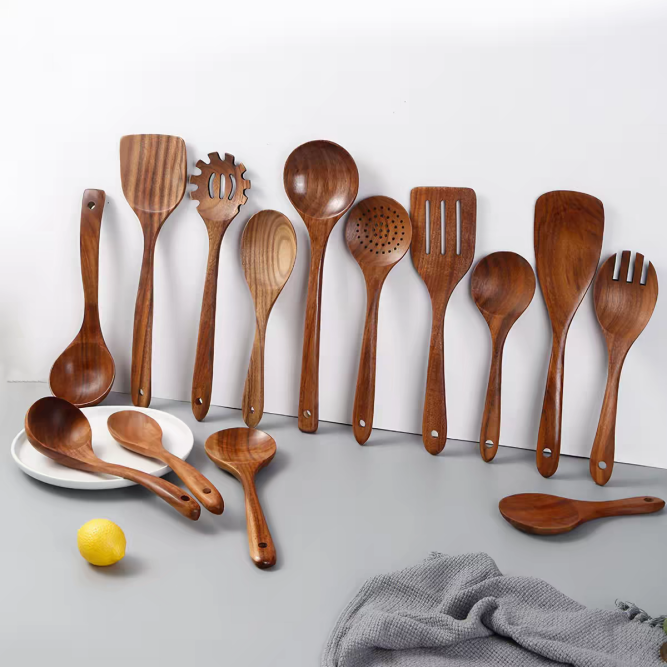
In 2024, China exported 485,000 tons of wood kitchenware and tableware — a 16% jump from the previous year — worth $1.4 billion in total export value. Walk into a Walmart, IKEA, or Costco in North America or Europe, and the wooden spatula on the shelf began its journey in a Chinese factory, probably made from beech, acacia, teak, or olive wood.
To put that $1.4 billion figure in context: it covers China's full wooden kitchenware export category — cutting boards, bowls, trays, chopsticks, and all forms of wooden tableware. Zoom into just the cooking utensil segment — spatulas, spoons, and similar handware — and the global market for that specific category was valued at $199 million in 2024, projected to reach $283 million by 2032 at a CAGR of 4.5%. The gap between those two numbers illustrates how dominant China is in wooden kitchenware manufacturing: China's exports in this broader category alone outpace the entire global retail market for cooking utensils. That dominance is driven by the scale, skill, and cost-efficiency of Chinese production — and it is being reinforced, right now, by AI.
Growth is driven by rising environmental awareness and increasing regulatory pressure against single-use plastics. Retailers are placing larger orders. Delivery windows are tighter. Quality expectations are rising.
And most wooden kitchenware factories are still preparing their blanks by hand.
THE PROBLEM
The hidden cost in every spatula blank
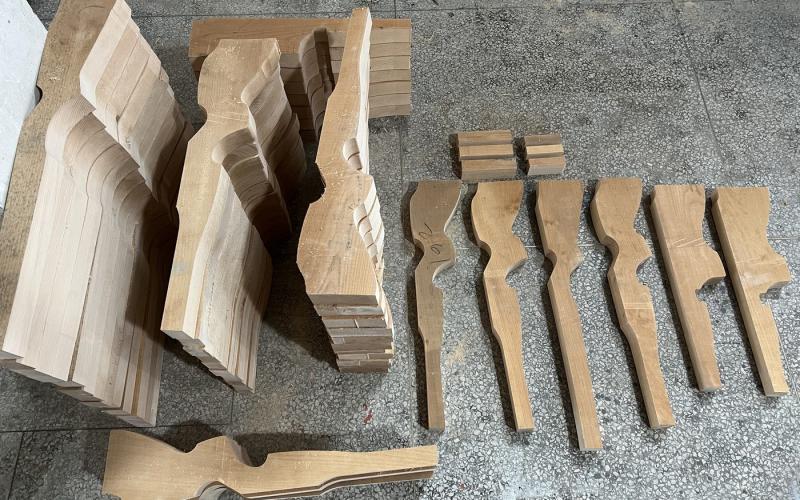
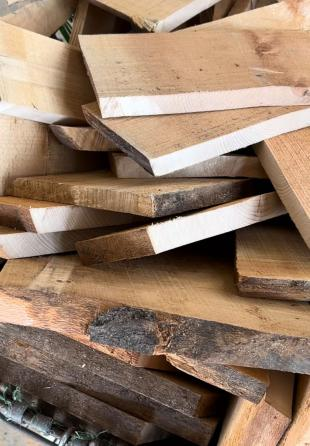
Before a wooden spatula or spoon takes shape, it starts as a rough sawn board — typically 20 to 35mm thick, in beech, acacia, teak, olive wood, or walnut. Before any profile cutting or shaping can begin, that board has to be broken down into usable blanks.
The traditional process has three steps — and every step introduces a cost that most factories have simply accepted as unavoidable.
Step 1 | Breaking Down The board is roughly sectioned with a hand saw or circular saw. Fast, but imprecise. |
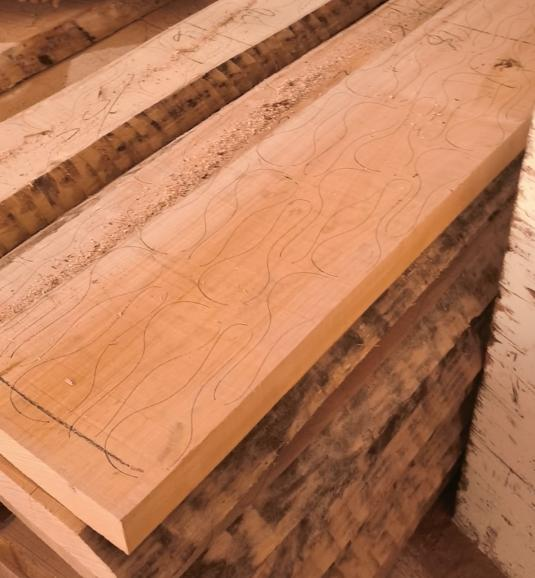
Step 2 | Manual Marking A worker marks product shapes onto each section by hand — drawing around knots and grain variations, estimating where each spatula or spoon outline will fit. |
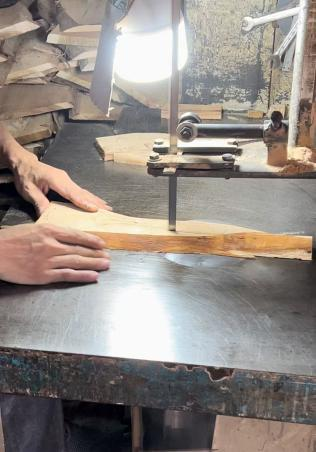
Step 3 | Band Saw Profile Cutting The marked sections are guided through a band saw to cut the rough blank shape. Accuracy depends entirely on the operator's steadiness and experience. |
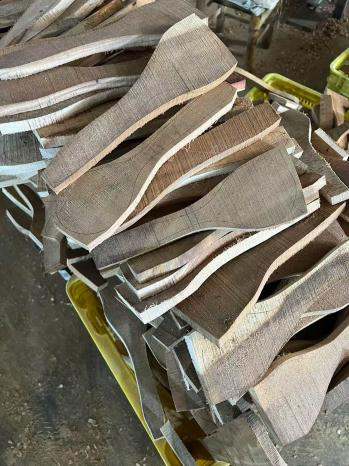
| Here is the detail that rarely gets discussed: Because band saw cutting is inherently imprecise, experienced workers are trained to leave significant extra material around every marked shape — a generous allowance that ensures the blank survives subsequent processing. The worker is not being wasteful. They are compensating for the imprecision of the next step. But that built-in allowance, multiplied across thousands of boards per day, is enormous. |
The result is a blank that needs extra material to compensate for imprecision — which means more wood consumed per piece, and more work for every downstream machine. When blanks are oversized due to generous manual allowances, profile shapers, sanders, and forming presses all have to work harder and longer to remove material that should never have been there.
THE REALITY
6 workers. Imprecise blanks. Every single day.
This was the situation at one of China's largest wooden kitchenware factories — a major supplier to European and North American supermarket chains, producing beech, acacia, teak, and olive wood spatulas and spoons at high volume.
Their blank preparation line required 6 workers operating across the three-step manual process. Despite that headcount, blank precision remained inconsistent. The extra material allowances built into the manual marking process were necessary — but wasteful. Throughput was capped by the speed of the team's best workers.
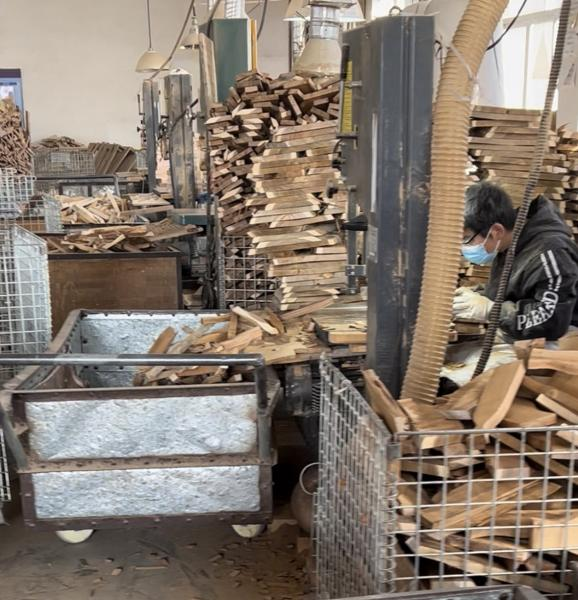
The downstream CNC shaping machines were capable of higher output. The blank preparation floor was the bottleneck.
THE SOLUTION
What two JXH AI Cutting Machines changed
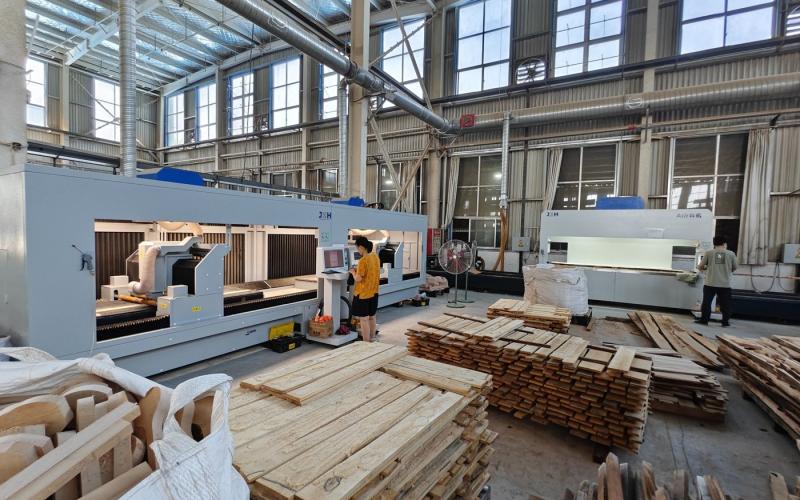
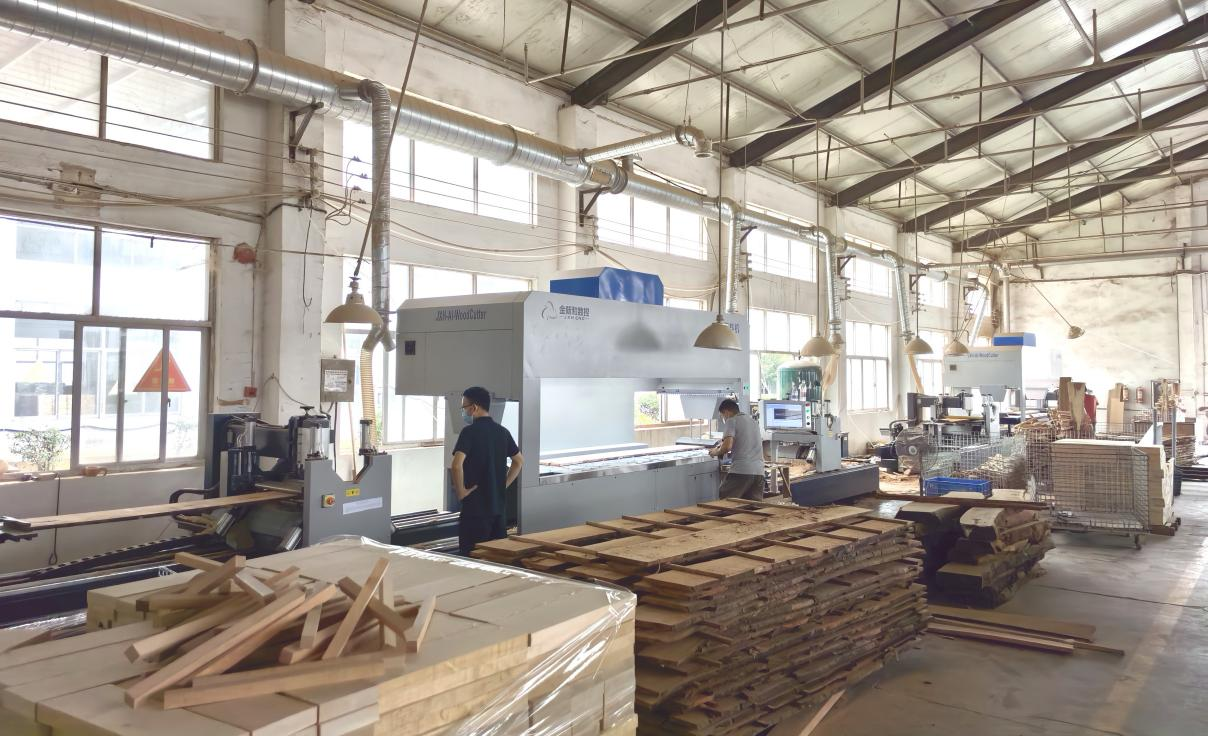
The factory installed two JXH AI Cutting Machines. The blank preparation workflow now looks like this:
A raw board — placed at any position on the worktable — is scanned automatically. The AI maps the full surface contour in seconds, identifies every defect (knots, cracks, wormholes, grain variations), and generates the optimal cutting layout across the entire product list. Tool paths are calculated and executed automatically. Both machines run from a single operating interface.
| The machine calculates the minimum necessary material for each blank — not the conservative estimate a human would make to protect against band saw variance, but the precise amount needed when the cutting path itself is accurate to under 1mm. No manual marking. No judgment calls about allowances. No dependence on how steady a worker's hand is that shift. |
Results:
Metric | Before | After JXH |
Blank preparation workers | 6 workers | 2 operators |
Blank cutting precision | Band saw, operator-dependent | <1mm, consistent |
Built-in material allowance | Generous — compensates for imprecision | Minimized — AI path is precise |
Daily output | Limited by manual throughput | 6,000+ pieces per day |
Operating mode | Variable | Full capacity, every shift |
| Two people. Over 6,000 pieces a day. Running at full capacity. |
WHY IT MATTERS
Blank precision determines the ceiling of your entire production line
The blank is not the finished product — but its precision determines the efficiency of everything that follows. When AI cutting produces blanks accurate to under 1mm, downstream processes get simpler, faster, and more consistent. Less material removed. Less tool wear. Less variation between batches.
The 6,000-piece daily output at this factory is not just a function of having two machines instead of a manual team. It is a function of the entire production chain running more efficiently because the blanks entering it are right the first time.
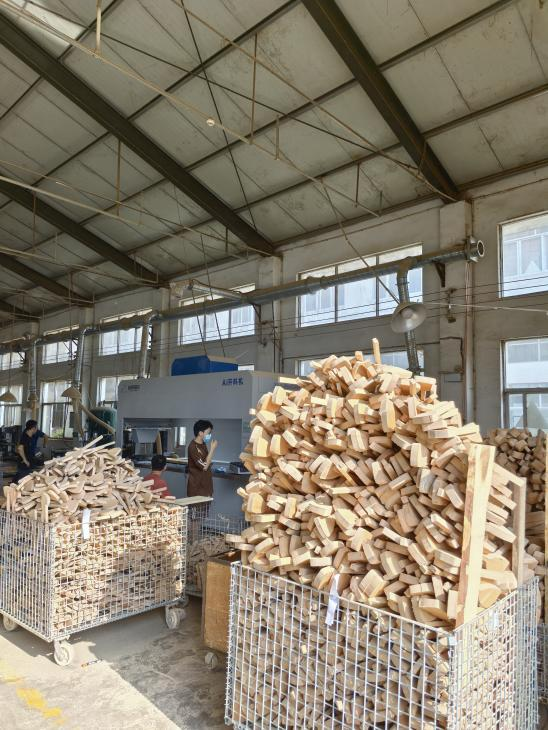
SPECIES PROCESSED
Our AI cutting system has processed all of the following for kitchenware blank production:
Beech | Acacia | Teak | Olive Wood | Black Walnut | Oak | Sapele & Wenge |
Each species has its own density, grain direction, and defect profile. The AI scanning and nesting system adapts automatically to every board — no reconfiguration, no reprogramming between species or board sizes.
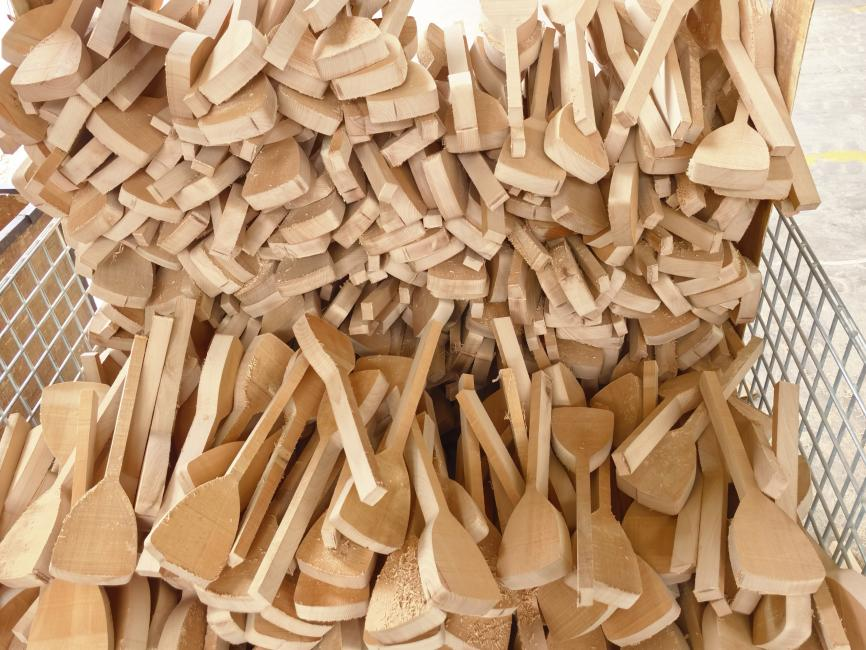
CLOSING
The market opportunity is clear. The production challenge is solvable.
China's wooden kitchenware export volumes grew 16% in a single year. The factories that will capture the next wave of that growth — larger orders, premium product lines, retail partnerships requiring guaranteed quality and lead times — will be the ones that have solved blank preparation.
Six workers and a band saw cannot scale to meet a $5 million annual purchase order from a European supermarket chain. Two operators running AI-optimized cutting machines can.
| Already deployed at wooden kitchenware factories in China, Romania, Russia, and across Southeast Asia. |
If you manufacture wooden spatulas, spoons, cutting boards, or serving utensils at scale — or if you source them for retail — I'd be glad to show you what full-capacity AI-powered blank preparation looks like in practice.

WhatsApp: +86 183 1498 3974
Website: www.jxh-cnc.com